

Artificial Intelligence (AI) automation is no longer just a buzzword in the business world. It has become a reality that has the potential to revolutionize the way small businesses operate and interact with their customers. By harnessing the power of AI automation, small businesses can streamline their processes, optimize their operations, and achieve greater efficiency and success.
AI automation for small business involves the use of intelligent software and tools that can perform complex tasks that would typically require human intelligence. These tasks include content creation, decision-making, and even customer service. By implementing AI automation, small businesses can simplify their operations, reduce costs, and increase revenue.
Key Takeaways:
- AI automation can revolutionize small businesses by streamlining operations and optimizing processes.
- Implementing AI automation can lead to greater efficiency, reduced costs, and increased revenue.
- AI automation tools can automate repetitive tasks, optimize inventory management, and streamline supply chain processes.
- AI-powered automation can enhance sales, marketing, and customer service efforts, providing personalized experiences for customers.
- Successfully implementing AI automation requires focusing on the right business problems, defining desired outcomes, collecting and organizing data, and choosing the right AI solutions.
With AI automation, small businesses can level the playing field and compete with larger enterprises. By embracing this technology, small business owners can simplify complex tasks, optimize their operations, and deliver exceptional customer experiences. The future is here, and AI automation is the key to unlocking the full potential of your small business.
AI technology offers small businesses numerous benefits, from streamlining processes to boosting productivity and enhancing customer experiences.
In today’s fast-paced digital world, small businesses are constantly looking for ways to optimize their operations and stay competitive. This is where AI technology comes in. By harnessing the power of AI, small businesses can revolutionize the way they operate, providing enhanced efficiency and driving growth.

One of the key advantages of AI for small businesses is the ability to streamline processes. With AI-powered automation, businesses can automate routine tasks, saving time and resources. For example, AI software can handle repetitive administrative tasks such as data entry and invoicing, reducing the risk of errors and freeing up employees to focus on more strategic tasks.
AI can also optimize inventory and supply chain management. By analyzing vast amounts of data, including inventory levels and market trends, AI-powered systems can provide accurate demand forecasts and suggest optimal inventory levels. This helps businesses maintain a balanced inventory, minimizing the risks of stockouts or overstocking.
Additionally, AI algorithms can unravel the complexities of the supply chain network, identifying hidden bottlenecks that hinder efficiency. This enables businesses to optimize the flow of goods and services, as well as streamline vital processes like production planning and logistics. By using AI to allocate resources efficiently, businesses can optimize staff schedules, machinery, and marketing budgets based on predictive returns on investment.
Enhancing sales, marketing & customer service with AI automation tools
Small businesses face challenges in marketing, selling, and managing customers. AI tools offer solutions to these challenges, providing a competitive edge in the marketplace.
AI-powered chatbots are becoming increasingly prevalent for customer service and support. These virtual assistants, equipped with natural language processing algorithms, can engage with customers, answer FAQs, and offer personalized recommendations. By providing round-the-clock availability, chatbots reduce wait times and improve overall customer experience.
AI tools can also enhance marketing efforts by enabling personalized marketing campaigns. By analyzing customer data and preferences, AI-powered marketing tools can create targeted content and recommendations, increasing customer engagement and driving sales. For example, an online bookstore can use AI-powered tools to send personalized emails to customers, recommending books based on their previous purchases and browsing history.
When it comes to content creation, AI-powered tools can optimize the process. These tools can analyze data on customer preferences and suggest topics and headlines for content creation. By automating content generation, businesses can save time and resources while ensuring high-quality content that aligns with their brand voice and messaging.
AI technology offers small businesses numerous benefits, from streamlining processes to boosting productivity and enhancing customer experiences. By leveraging AI-powered automation, businesses can automate routine tasks, optimize inventory and supply chain management, and allocate resources efficiently. AI tools also enhance sales, marketing, and customer service efforts, providing a competitive edge in the marketplace.
Streamlining Business Processes with AI Automation
With AI automation, small businesses can streamline their operations, reduce costs, and eliminate efficiency bottlenecks. Implementing AI technologies allows businesses to optimize various processes and achieve significant improvements in productivity and effectiveness. Let’s explore some examples of how AI automation can revolutionize small business operations:
Automation of Routine Business Tasks
In small businesses, administrative tasks can be time-consuming and often repetitive. AI-powered software, such as Scribe, can automate these tasks, freeing up valuable time for employees. For example, Scribe can quickly create visual documentation, streamlining processes, and facilitating staff and customer training. This automation not only saves time but also reduces the risk of errors resulting from manual data entry.
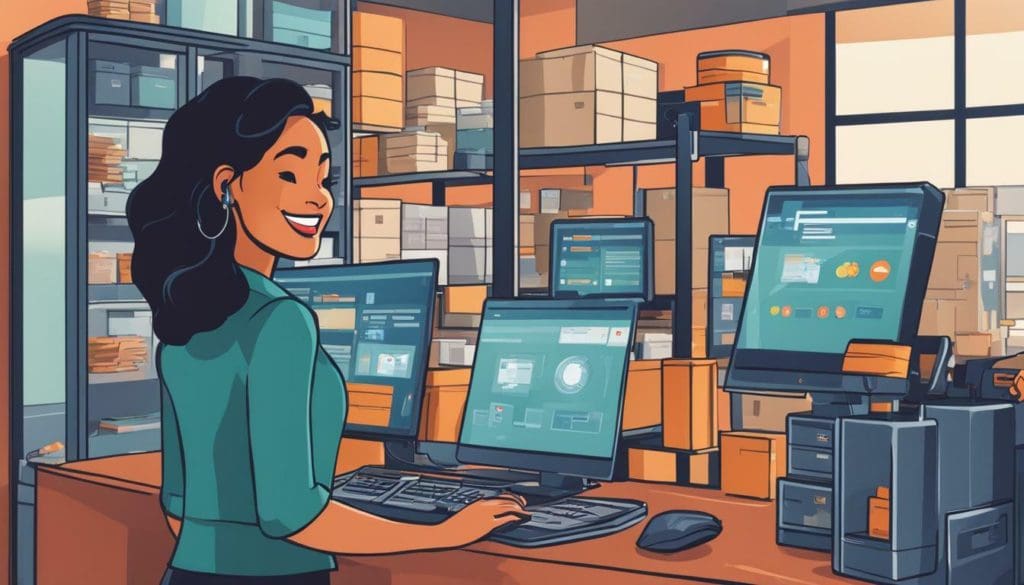
“Scribe is a powerful AI tool that simplifies documentation creation for small businesses. With its user-friendly interface and automation capabilities, it can revolutionize the way you streamline processes.”
Optimizing Inventory Management
Managing inventory efficiently is crucial for small businesses to meet customer demands and avoid overstocking or stockouts. AI-powered systems, like inventory management software, analyze data such as inventory levels, customer preferences, and market trends to provide accurate demand forecasts and recommendations for optimal inventory levels.
“By leveraging AI for inventory management, small businesses can maintain a balanced inventory, ensuring they have the right products available when customers need them.”
Streamlining Supply Chain Management
The supply chain is a complex network of processes, and small businesses often face challenges in optimizing these operations. AI algorithms can analyze data and identify hidden bottlenecks, enabling businesses to optimize the flow of goods and services and streamline processes such as production planning, procurement, and logistics.
“AI can unlock valuable insights into your supply chain, helping you identify and eliminate inefficiencies and improve overall operational efficiency.”
Optimal Resource Allocation
Sophisticated AI systems offer insights and recommendations for resource allocation, helping small businesses optimize staff schedules and allocate marketing budgets effectively. By leveraging AI algorithms, businesses can make data-driven decisions on resource allocation, ensuring efficient use of available resources.
“With AI automation, small businesses can make smarter decisions about resource allocation, optimizing staff schedules and allocating budgets based on predictive returns on investment.”
Conclusion
AI automation presents small businesses with incredible opportunities to streamline their operations, reduce costs, and achieve higher levels of efficiency. By implementing AI technologies, businesses can automate routine tasks, optimize inventory and supply chain management, and allocate resources effectively. Additionally, AI can enhance sales, marketing, and customer service efforts, helping small businesses stay competitive in a digital world. Embracing AI automation is essential for small businesses looking to revolutionize their operations and achieve sustainable growth in today’s dynamic business landscape.
AI-Powered Automation for SMEs: Boosting Efficiency
Discover how AI-driven automation can revolutionize your SME by boosting efficiency, reducing manual labor, and enhancing overall performance. AI technologies are transforming the way businesses operate, and small and medium-sized enterprises (SMEs) can leverage these advancements to streamline their operations.
In today’s competitive business landscape, efficiency is key to success. AI-powered automation can handle repetitive tasks and optimize various business processes, enabling SMEs to focus on strategic initiatives and drive growth. Let’s explore how AI-driven automation can benefit your small business.
Automation of routine business tasks
One of the significant advantages of AI automation for SMEs is the ability to automate routine administrative tasks. Manual data entry, process documentation, and invoicing can be time-consuming and prone to errors. By utilizing AI-powered tools, SMEs can eliminate these manual tasks and save valuable time.
Take Scribe, for example. This AI-powered tool simplifies the process of creating visual documentation. With Scribe, you can easily document your processes, streamlining operations and facilitating staff and customer training. This helps your business become more efficient and reduces the risk of errors.
Here’s an example of how Scribe can be used:
“Scribe is a game-changer for our business. It allows us to create detailed documentation with ease, ensuring that our processes are streamlined and our staff is well-trained. Thanks to Scribe, we’ve seen a significant improvement in our efficiency and accuracy.”
– John Smith, CEO of XYZ Company
Optimizing inventory management
AI-powered systems revolutionize inventory management by analyzing vast amounts of data, including inventory levels, customer preferences, and market trends. With accurate demand forecasts and optimal inventory level suggestions, SMEs can fine-tune their stock and avoid stockouts or overstocking.
This not only saves costs associated with inventory management but also ensures a balanced inventory, reducing the risk of lost sales due to inadequate stock or wasted resources due to excess stock.
Streamlining supply chain management
The complexities of supply chain management can hinder efficiency in SMEs. However, with AI algorithms, SMEs can uncover hidden bottlenecks and optimize the flow of goods and services. AI-driven automation can streamline vital processes like production planning, procurement, and logistics.
For instance, demand forecasting models can help SMEs calibrate procurement schedules and maintain the necessary inventory, avoiding excess stock. This ensures optimal resource allocation and improves overall supply chain efficiency.
Optimal resource allocation
AI-powered automation not only streamlines administrative tasks but also provides insights and recommendations for resource allocation. This includes optimizing staff schedules, machinery, equipment, and even marketing budgets.
With AI algorithms, SMEs can identify the best allocation of resources to maximize efficiency and productivity. Marketing budgets can be allocated based on predictive returns on investment, ensuring resources are used efficiently and generating the highest possible returns.
By leveraging AI-powered automation, SMEs can boost efficiency, reduce manual labor, and optimize resource allocation, ultimately driving business growth and success.
The future of AI automation for small businesses
The potential of AI automation for SMEs is vast, and the future looks promising. As technology continues to advance, AI tools and solutions will become more accessible and affordable for small businesses.
Emerging trends, such as robotic process automation (RPA), will further enhance AI automation capabilities for SMEs. RPA can automate repetitive tasks, increase process efficiency, and reduce errors, allowing SMEs to focus on value-added activities.
Additionally, advancements in machine learning and natural language processing will empower AI systems to become even more intelligent and adaptable to SMEs’ specific needs.
Conclusion
AI-driven automation is revolutionizing SMEs by boosting efficiency, reducing manual labor, and enhancing overall performance. By embracing AI technologies, small businesses can automate routine tasks, optimize processes, and allocate resources strategically.
Implementing AI successfully requires a thoughtful approach, focusing on the right business problems, defining desired outcomes, collecting and organizing data, and choosing the right AI solutions. Overcoming challenges and obstacles is also crucial for successful AI implementation in SMEs.
As AI continues to evolve, small businesses need to stay informed about the latest advancements and seize the opportunities AI automation offers. By embracing AI-powered automation, SMEs can unlock their full potential, achieve sustainable growth, and stay competitive in today’s digital landscape.
Enhancing Sales, Marketing, and Customer Service with AI
AI opens up new possibilities for small businesses to enhance their sales, marketing, and customer service strategies, improving engagement and driving growth. With the power of AI, small businesses can leverage automation and personalization to create exceptional customer experiences and stand out in a competitive marketplace.

One of the key ways AI can enhance customer service is through the use of chatbots. These AI-powered virtual assistants provide 24/7 customer support, ensuring that businesses can quickly respond to inquiries and resolve customer issues. Through natural language processing algorithms, chatbots can engage with customers, answer frequently asked questions, and even provide personalized recommendations based on customer data.
By implementing chatbots, small businesses can reduce wait times, cut staffing costs, and deliver prompt and seamless customer service. The ability of chatbots to continuously learn from customer interactions also ensures that they become more accurate and effective over time.
“AI-powered chatbots provide round-the-clock availability to address customer queries and concerns. These virtual assistants use natural language processing algorithms to engage with customers, answer FAQs, and offer personalized recommendations.”
Automation is another essential aspect of AI for small businesses. By automating routine sales tasks, businesses can streamline their operations and free up valuable resources. AI automation tools can handle tasks such as customer data analysis, sales email personalization, appointment scheduling, and operational efficiency improvement.
For example, small businesses can leverage AI automation to streamline their sales efforts by automating routine tasks and processes. This allows sales teams to focus on high-value activities such as building relationships with customers and closing deals. By freeing up time and resources, small businesses can drive growth and achieve operational efficiency.
When it comes to marketing, AI-powered tools can help small businesses create personalized and targeted marketing campaigns. By analyzing customer behavior and preferences, AI can enable businesses to segment their customer base and send tailored marketing messages that resonate with individual customers.
For instance, an online bookstore can use AI-powered marketing tools to send personalized emails recommending books based on a customer’s previous purchases and browsing history. This personalized approach enhances customer engagement and increases the likelihood of sales conversions.
- Enhance customer engagement through personalized marketing campaigns.
- Improve operational efficiency by automating routine sales tasks.
- Optimize customer service with AI-powered chatbots.
By leveraging AI in sales, marketing, and customer service, small businesses can achieve a competitive edge and drive growth. The power of AI lies in its ability to automate processes, personalize experiences, and analyze data, enabling small businesses to deliver exceptional customer service, target their marketing efforts effectively, and optimize their sales strategies.
Unlocking the Potential of AI
Small businesses can unlock the full potential of AI by embracing AI-powered tools and platforms. These tools are designed to be user-friendly and require no coding or technical expertise, making them accessible to businesses of all sizes.
By investing in AI and staying up-to-date with the latest advancements in AI technology, small businesses can stay competitive in the digital age. AI opens up new possibilities for small businesses, enabling them to enhance their sales, marketing, and customer service strategies, driving growth and success.
Implementing AI Successfully in Small Businesses
Discover how to implement AI successfully in your small business, from identifying the right business problems to choosing the right AI solutions. AI has the potential to revolutionize the way small businesses operate, providing a competitive advantage and enabling them to scale and grow in new ways.
When implementing AI in your small business, it’s crucial to focus on the right business problems that AI can help solve. Start by identifying areas where AI can add the most value, such as automating repetitive tasks, optimizing processes, or enhancing customer experiences.
Once you have identified the problem areas, clearly define the desired outcomes you want to achieve with AI. Whether it’s improving efficiency, reducing costs, or increasing revenue, having clear goals will guide your implementation strategy.
Collecting and organizing data is essential for successful AI implementation. AI algorithms rely on data to learn and make informed decisions. Ensure that you have access to relevant and reliable data that can be used to train your AI systems.
Choosing the right AI solutions for your small business is critical. There are various AI automation tools and platforms available, so it’s essential to evaluate them based on your specific needs and budget. Consider factors such as ease of use, scalability, integration capabilities, and customer support.
AI implementation may require some initial investment in terms of time and resources. However, the long-term benefits and impact on your small business can be significant. AI can help you streamline processes, automate tasks, and make data-driven decisions, ultimately driving growth and success.
“AI has the potential to revolutionize the way small businesses operate, providing a competitive advantage and enabling them to scale and grow in new ways.”
– The State of AI in the Enterprise, 5th edition report
Remember that successful AI implementation goes beyond just adopting technology. It involves a mindset shift and a commitment to embracing innovation in your small business. Stay up to date with the latest advancements in AI and continuously evaluate and optimize your AI systems to ensure they align with your business goals.
By implementing AI successfully, small businesses can unlock new opportunities, improve productivity, enhance customer experiences, and stay ahead of the competition in today’s digital age.

Don’t miss out on the benefits that AI automation can bring to your small business. Start exploring the possibilities of AI today and revolutionize the way you operate, grow, and succeed.
Addressing Challenges and Overcoming Obstacles
Learn how to overcome challenges and maximize the benefits of AI automation in your small business, from selecting the right tools to addressing potential obstacles.
Incorporating AI automation into your small business can be a transformative endeavor, but it’s important to navigate potential challenges and obstacles along the way. By being prepared and proactive, you can ensure a smooth implementation and reap the full rewards of this powerful technology.
Selecting the Right Tools
When it comes to AI automation, selecting the right tools for your small business is crucial. With a myriad of options available, it’s important to consider your specific needs and goals. Look for AI automation tools that align with your industry and can address your unique business challenges.
Consider factors such as functionality, ease of use, scalability, and compatibility with your existing systems. Take advantage of free trials and demos to assess the tools firsthand and determine if they meet your requirements.
Addressing Potential Obstacles
Implementing AI automation may present some challenges, but with the right approach, they can be overcome. Here are some common obstacles and strategies to address them:
- Lack of Awareness and Understanding: Many small business owners may be unfamiliar with AI automation and its potential benefits. Educate yourself and your team about the capabilities and advantages of AI automation. Consider attending workshops, webinars, or conferences to stay updated on the latest trends and developments.
- Resistance to Change: Introducing new technologies can sometimes meet resistance from employees. Communicate the benefits of AI automation to your team and involve them in the decision-making process. Provide training and support to help them adapt to the new tools and workflows.
- Data Security and Privacy: AI automation relies on data, and ensuring its security and privacy is paramount. Implement robust data protection measures, including encryption, regular backups, and access controls. Stay compliant with relevant data protection regulations, such as GDPR or CCPA.
- Integration Challenges: Integrating AI automation tools with existing systems and workflows can be complex. Work closely with your IT team or consultants to ensure smooth integration and minimize disruptions. Consider conducting thorough testing and piloting before full-scale implementation.
- Cost Considerations: While AI automation can deliver significant benefits, it’s important to carefully consider the associated costs. Conduct a cost-benefit analysis to determine the return on investment. Explore options such as cloud-based solutions or outsourcing to optimize costs.
Maximizing the Benefits
By addressing these challenges and overcoming obstacles, you can maximize the benefits of AI automation in your small business. Some key benefits include:
AI automation streamlines repetitive tasks, saving time and reducing errors. Businesses can optimize their operations and allocate resources more efficiently.
AI-powered tools enhance customer service by providing 24/7 support through chatbots and automating routine interactions. This improves customer satisfaction and loyalty.
AI automation enables personalized marketing campaigns, allowing businesses to target their audience more effectively and drive better results.
By leveraging AI, small businesses can gain a competitive edge, improve decision-making, and drive growth in today’s digital landscape.
With the right tools, strategies, and mindset, your small business can fully embrace AI automation and unlock its transformative potential. Embrace the challenges, learn from them, and position your business for success in the AI-powered future.
Continue reading: The Future of AI Automation for Small Businesses.
Explore the exciting future possibilities of AI automation in small businesses
As AI technology continues to advance, the future possibilities for AI automation in small businesses are expanding. From new advancements in AI algorithms to tailored solutions specifically designed for SMEs, the potential for AI to revolutionize small business operations is immense.
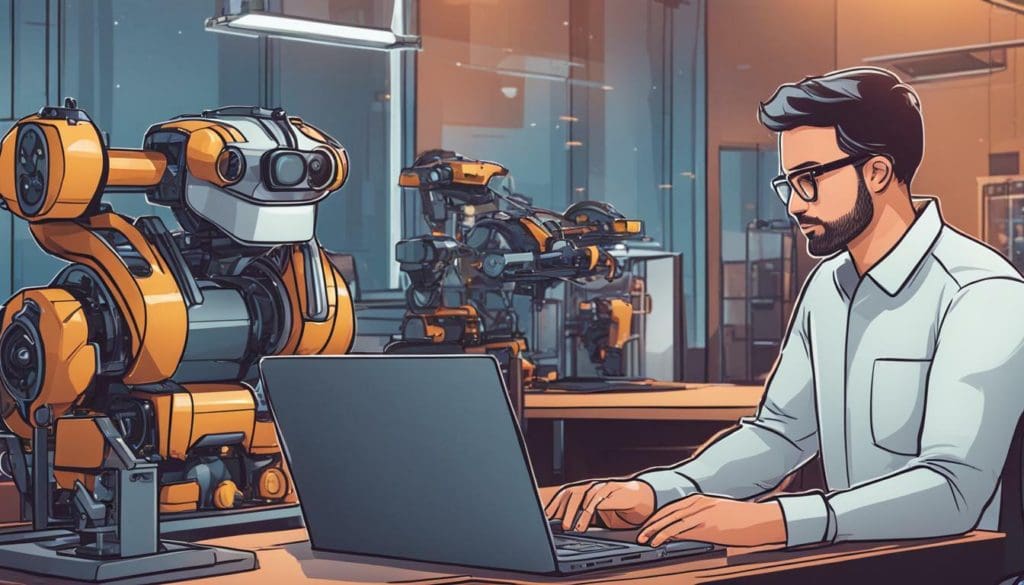
Advancements in AI Technology
One of the key factors driving the future of AI automation is the continued advancements in AI technology. As AI algorithms become more sophisticated and powerful, small businesses can expect even greater automation capabilities.
For example, AI-powered chatbots are evolving to provide more natural and personalized interactions with customers. These chatbots can understand context and intent, allowing for more efficient and effective customer service experiences.
AI technology is evolving rapidly, and small businesses are poised to benefit from these advancements. With AI-powered solutions becoming more accessible and user-friendly, the future of AI automation is within reach for SMEs.
Tailored Solutions for SMEs
Another exciting aspect of the future of AI automation for small businesses is the development of tailored solutions specifically designed to meet the needs of SMEs.
Traditionally, AI solutions were often designed for larger enterprises with more resources and budgets. However, as AI adoption continues to grow among small businesses, there is a rising demand for solutions that are affordable, scalable, and easy to implement.
Companies are now developing AI tools and platforms that cater to the unique requirements of small businesses. These solutions offer simplified interfaces, flexible pricing models, and customizable features, making AI automation accessible to SMEs.
The Impact on Small Business Operations
The future of AI automation holds significant potential for small businesses. By embracing AI technology, SMEs can expect to experience several benefits, including:
- Increased efficiency and productivity through the automation of routine tasks
- Streamlined business processes and workflows
- Improved customer service and personalized experiences
- Enhanced decision-making based on data-driven insights
- Optimized resource allocation and cost management
- Competitive advantage in the market
With AI automation, small businesses can focus their time and resources on core business activities, driving growth and success in a rapidly evolving digital landscape.
| Benefit | Description |
|---|---|
| Increased efficiency and productivity | Automation of routine tasks frees up time and resources for more strategic activities. |
| Streamlined business processes | AI automation optimizes workflows, saving time and reducing inefficiencies. |
| Improved customer service | AI-powered solutions provide personalized experiences and prompt support. |
| Enhanced decision-making | Data-driven insights from AI analytics tools enable informed decision-making. |
| Optimized resource allocation | AI algorithms help businesses allocate resources effectively for maximum impact. |
| Competitive advantage | AI automation enables small businesses to stand out in the market. |
By embracing AI automation, small businesses can unlock new levels of efficiency, productivity, and customer satisfaction, paving the way for long-term growth and success.
As the future of AI automation unfolds, small businesses must stay informed about the latest advancements and opportunities. By exploring and implementing AI-powered solutions tailored for SMEs, businesses can position themselves at the forefront of innovation and gain a competitive edge in their respective industries.
Embrace the Power of AI Automation in Your Small Business
Unlock new levels of efficiency, productivity, and growth by harnessing the power of AI automation in your small business. With AI technology rapidly evolving, it has become a game-changer that can revolutionize the way small businesses operate and interact with customers. By implementing AI automation solutions, you can streamline business processes, enhance customer service, and drive sustainable growth.
Improved Customer Service
Customer service is the backbone of any successful business, and AI can significantly improve the quality of service that small businesses provide. AI-powered chatbots can provide 24/7 customer support, ensuring prompt and personalized responses to inquiries. These chatbots can analyze customer data to deliver tailored recommendations, creating a personalized experience that increases customer loyalty.
Increased Efficiency and Productivity
Small businesses often face resource limitations, but AI automation can help them do more with less. By automating repetitive tasks such as data entry, invoicing, and inventory management, AI-powered solutions free up employees’ time to focus on more strategic tasks. For example, an AI-powered invoicing system can automatically send reminders to customers and an inventory management system can optimize stock levels, ensuring efficient operations.
Better Decision Making
AI-powered analytics tools enable small businesses to make data-driven decisions by analyzing large amounts of data in real-time. This provides insights into customer behavior, market trends, and competitor activity. By leveraging AI analytics, small businesses can adjust their strategies accordingly, such as adapting their menu based on customer reviews or optimizing staffing levels based on peak hours.
Enhanced Marketing Strategies
Creating effective marketing strategies with limited resources can be challenging for small businesses, but AI-powered marketing tools offer a solution. These tools enable businesses to create targeted campaigns based on customer behavior and preferences. For instance, AI-powered email marketing can recommend books to customers based on their previous purchases, boosting engagement and driving more sales.
Competitive Edge
AI gives small businesses a competitive edge by enabling them to automate processes, analyze data, and personalize customer experiences. By embracing AI technologies, small businesses become more efficient, productive, and customer-centric. For example, an accounting firm can automate bookkeeping tasks, allowing employees to focus on providing financial advice to clients and standing out in a crowded market.
Conclusion
Embracing AI automation in your small business is the key to unlocking new levels of efficiency, productivity, and growth. The benefits are clear—improved customer service, increased efficiency, better decision making, enhanced marketing strategies, and a competitive edge. Don’t let your business fall behind; invest in AI-powered tools and solutions that suit your business needs. By harnessing the power of AI, small businesses can thrive in the digital age and achieve new heights of success.
FAQ
Q: What is AI automation for small businesses?
A: AI automation for small businesses refers to the use of artificial intelligence technology to automate and streamline various business processes, such as customer service, marketing, and inventory management.
Q: What are the benefits of AI automation for small businesses?
A: AI automation offers several benefits for small businesses, including improved efficiency and productivity, enhanced customer service, better decision-making, and the ability to compete with larger corporations.
Q: How can AI automation streamline business processes?
A: AI automation can streamline business processes by automating repetitive tasks, optimizing inventory management, streamlining supply chain management, and facilitating optimal resource allocation.
Q: How can AI automation enhance sales, marketing, and customer service?
A: AI automation can enhance sales, marketing, and customer service efforts by enabling personalized customer experiences, automating routine sales tasks, and improving operational efficiency.
Q: What should small businesses consider when implementing AI automation?
A: When implementing AI automation, small businesses should focus on the right business problems, define desired outcomes, collect and organize data, and choose the right AI solutions for their specific needs.
Q: What challenges may small businesses face when implementing AI automation?
A: Common challenges when implementing AI automation in small businesses include cost, lack of technical expertise, data privacy concerns, and resistance to change. However, these challenges can be addressed with proper planning and support.
Q: What does the future hold for AI automation in small businesses?
A: The future of AI automation in small businesses is promising, with emerging trends and advancements expected to further enhance efficiency, productivity, and customer experiences.