Think AI can't make mistakes? Think again, smarty-pants.
Why it matters: As small business owners increasingly rely on AI tools like ChatGPT, understanding the difference between AI hallucinations and reasoning errors is crucial.
It's like knowing whether your virtual assistant is lying or just bad at math—both are problematic, but for very different reasons.
The big picture
OpenAI's new O1 model promises improved reasoning, but it won't eliminate hallucinations.
These are two distinct issues:
- Hallucinations: AI generating factually incorrect information
- Reasoning errors: AI failing to apply logic correctly
Overheard at the water cooler
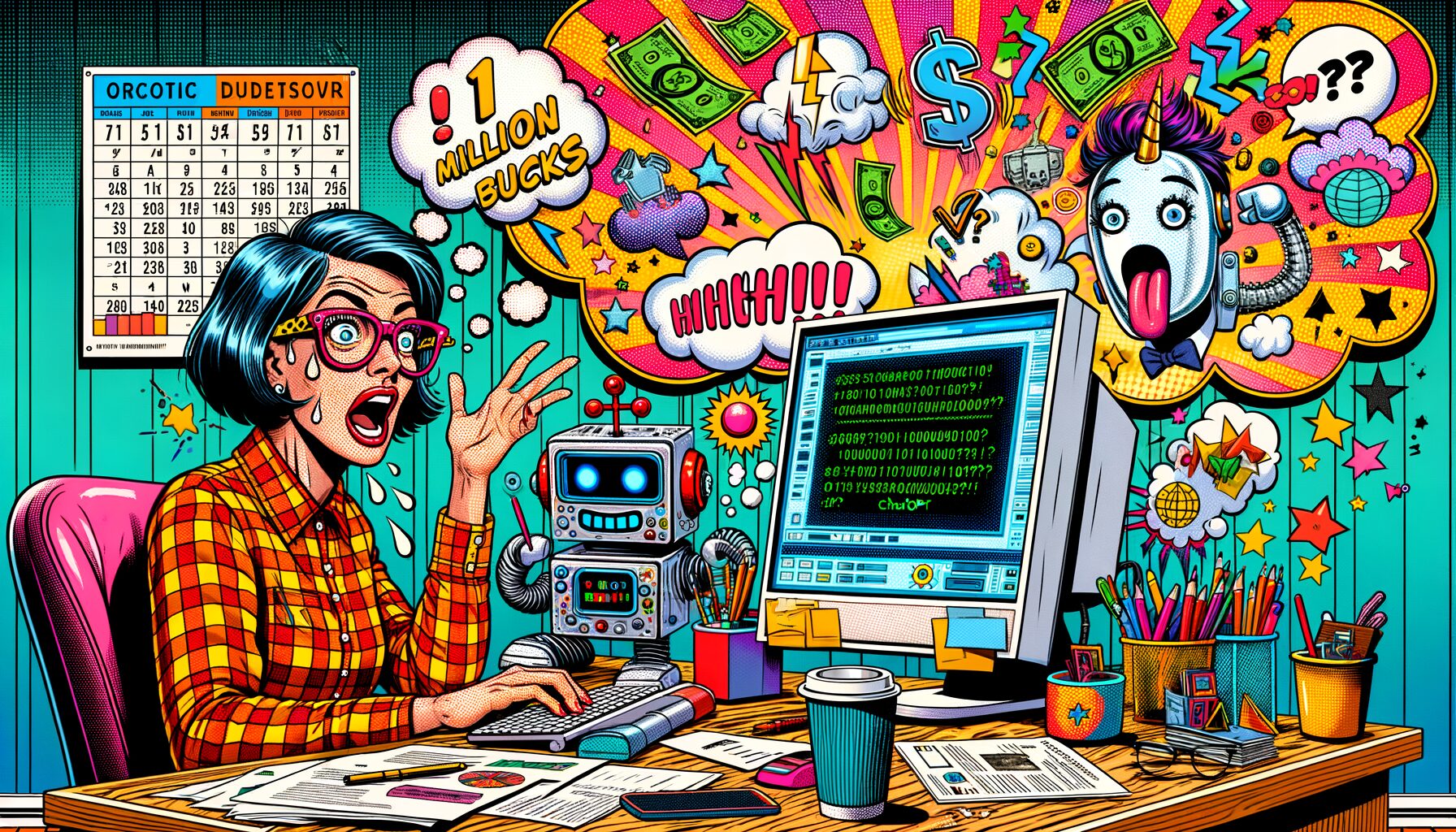
"Dude, I asked ChatGPT to calculate my profits, and it told me I made a million bucks selling invisible unicorns. I wish!"
By the numbers
- 0.44: O1 model's hallucination rate in SimpleQA test (down from GPT-4o's 0.61)
- 83%: O1 model's accuracy on International Mathematics Olympiad qualifying exam (up from GPT-4o's 13%)
- 0.02%: Cases where O1-preview produces overly confident, potentially incorrect responses
The bottom line
Understanding AI's limitations is key to harnessing its power.
Don't blindly trust your AI sidekick—treat it like that smart but occasionally unreliable intern.